
Short answer: no, a warehouse door is not just a bigger garage door
Commercial overhead doors and residential garage doors are built to different standards, carry different spring and opener systems, and need different maintenance schedules. If someone in your house is arguing that the shop door out back can be serviced the same way as the one on the house, this should settle it. They're related, but they're not the same product, and treating them the same way shortens their life.
Why the construction is different
Residential doors are sized for one or two cars and maybe a handful of openings a day. Commercial and warehouse doors are sized for trucks, forklifts, and foot traffic moving through dozens of times daily. That difference shows up in a few concrete ways:
- Panel gauge and material: Commercial doors typically use heavier-gauge steel or aluminum sections, sometimes with reinforced ribbing, because they take more physical abuse and need to hold up under higher wind-load requirements.
- Track and hardware size: Commercial tracks, rollers, and hinges are built heavier to support the extra weight and cycle count without stretching or wearing out early.
- Width and height options: Many commercial doors run wider and taller than anything made for a house garage, which changes how the counterbalance system has to be engineered.
The spring system carries more of the load
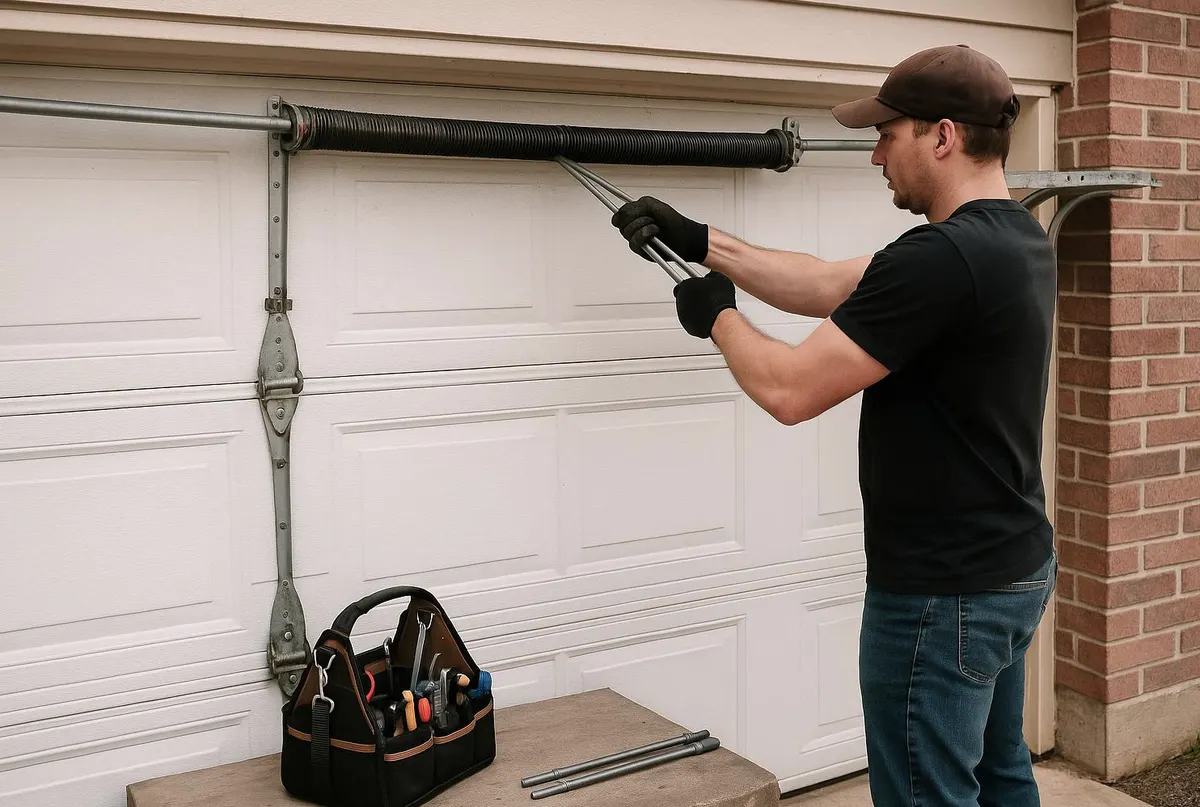
This is where the real difference lives. A residential torsion spring is rated for a certain number of cycles, often enough for years of normal household use. Commercial torsion spring systems are rated for far higher cycle counts because the door might open and close many times a day, every day. They also often use larger-diameter springs, sometimes paired as a set, to safely counterbalance a heavier door. Swap a residential-grade spring onto a commercial door and it will wear out fast, sometimes within months, which usually looks like a sudden hard stop mid-cycle or a door that feels heavy and sluggish before it breaks.
Openers are built for duty cycle, not just horsepower
It's tempting to think a stronger residential opener solves the problem for a slightly bigger door. It doesn't. Commercial operators are rated for duty cycle, meaning how much continuous running they can handle without overheating, in addition to raw lifting power. A residential opener pushed into commercial-style daily use will run hot, wear out its gears early, and can fail without warning. Commercial installations also often include extra safety features like separate motor and control units, which matter more when the door is moving heavier loads near people and equipment all day.
Maintenance needs are not on the same clock
Because commercial doors cycle so much more often, they need more frequent attention, not less. A few practical differences:
- Inspection frequency: A residential door might get a seasonal check. A commercial door earning its keep every day benefits from more frequent lubrication and hardware checks, since worn rollers or loose hinges show up faster under heavier use.
- Spring life tracking: Commercial springs are cycle-rated, so a business owner benefits from knowing roughly how many openings the door sees per day to anticipate replacement before a spring snaps mid-shift.
- Weatherstripping and seals: Afternoon downpours and humid air push moisture into any gap, and a wider commercial door has more seal length to maintain. Swollen or cracked seals let in water and let out cooled air just like on a house, but the square footage is bigger, so the energy and water-intrusion impact is bigger too.
- Rust watch near moisture-heavy sites: Salt air and constant humidity accelerate corrosion on hardware, hinges, and track bolts. Commercial doors with heavier hardware aren't immune, they just take longer to show it, which means an owner can go too long between checks and miss early rust before it weakens a bracket.
Wind-load rules apply to both, but the stakes differ
Both residential and commercial doors in this part of Florida need to handle hurricane-season wind loads, since a failed door during a storm can let wind pressure into the whole structure. The difference is scale: a failed warehouse door exposes a much larger opening and often protects more valuable inventory or equipment behind it. That's one more reason commercial hardware, bracing, and springs need to be rated correctly for the door's size and use, not borrowed from a residential catalog.
When to call Minneola Overhead Door Co
If a commercial or warehouse door is cycling hard every day, feels heavier than it used to, or an opener is running hot and tripping out, that's the point to get it looked at before a spring lets go or a motor burns up. We handle Garage Door Spring Repair for doors that need the right cycle-rated spring for the actual workload, and Garage Door Maintenance & Tune-Up service that catches worn rollers, loose hardware, and early rust before they turn into a stuck door during business hours. We serve Minneola, Clermont, Groveland, Montverde, Winter Garden, Mascotte, Leesburg, and Tavares, and we show up on time whether it's a two-car garage or a warehouse bay.
If you've got a commercial door that's earning its keep every day in Minneola, FL, give us a call before the next busy season puts more strain on it than it can handle.